
OpenSSL at Žijeme{IT} 2026: meeting the next generation of IT talent in Brno
I want to tell you about a Thursday evening in November, and about how far our cooperation with the faculty has come since May.
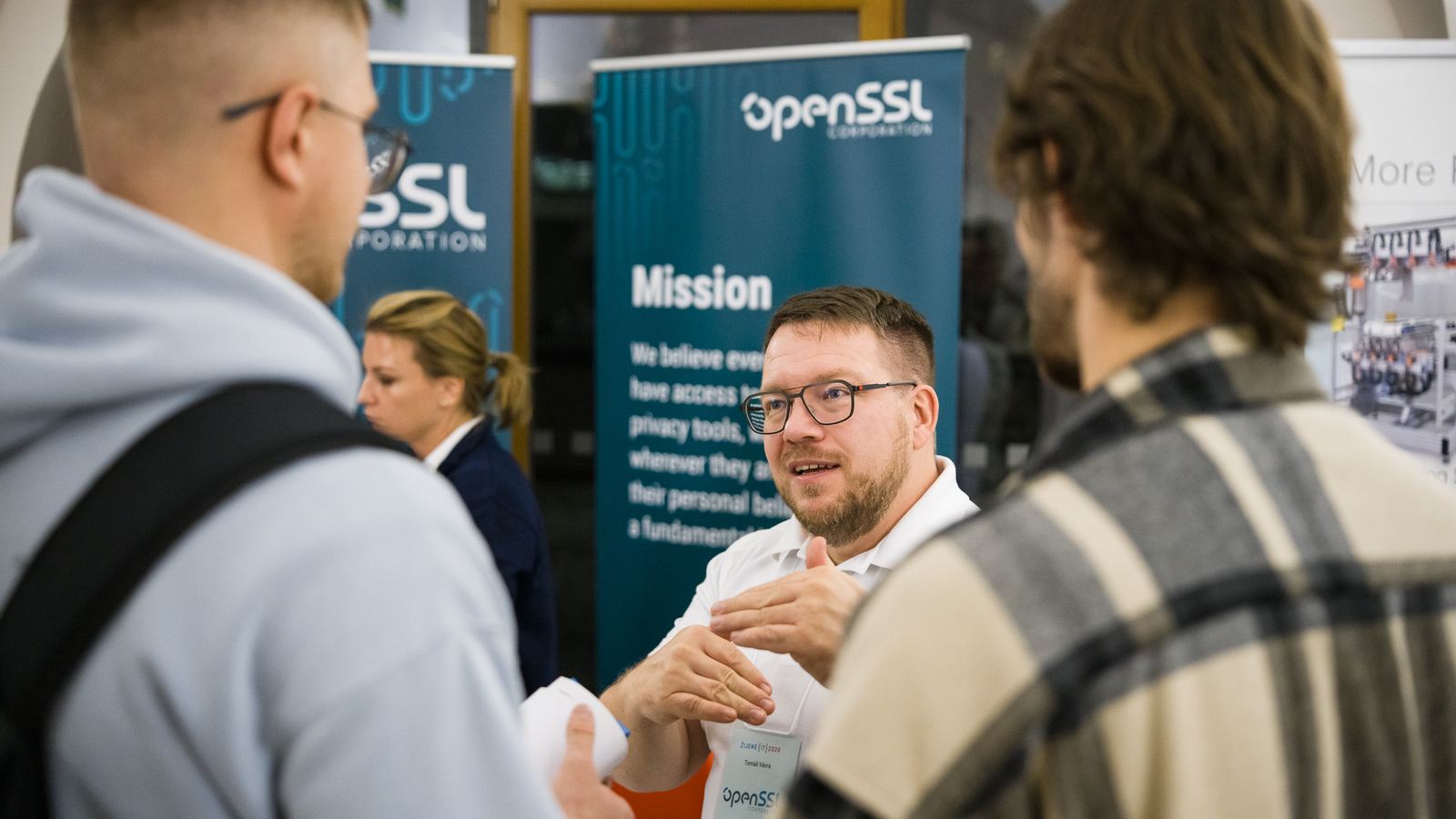
On 19 November, four of the OpenSSL Corporation team spent the evening at Žijeme{IT} 2026, the conference on innovative technologies at the Faculty of Information Technology, Brno University of Technology (FIT VUT). It is the same former monastery I wrote about in May, when we first came as an industrial partner. This time we had a seat at the faculty’s Industrial Council and a talk in the programme, and a booth where a paper escape room kept students at the table for more than an hour.
The shape of the evening
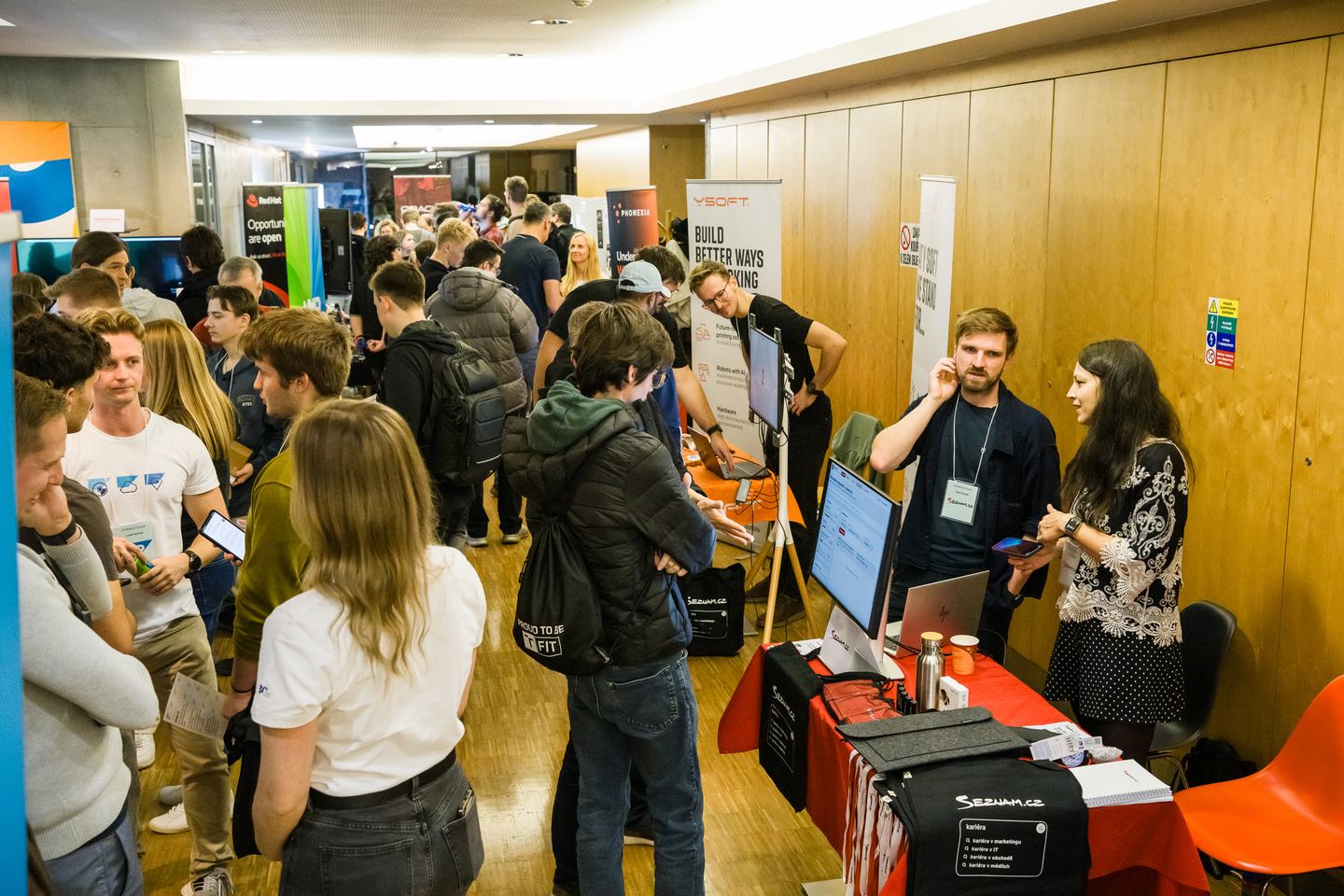
Žijeme{IT} translates roughly as “we live IT”. The evening puts students in the same rooms as IT companies and graduates, and it opened with a panel of experts from the partner companies on how AI is changing the work of IT engineers.
After the panel the programme split into three tracks, AI & Machine Learning, Security & Embedded Systems, and DevOps, Cloud & Software Engineering. Sixteen talks ran across three lecture halls until a quarter past nine.
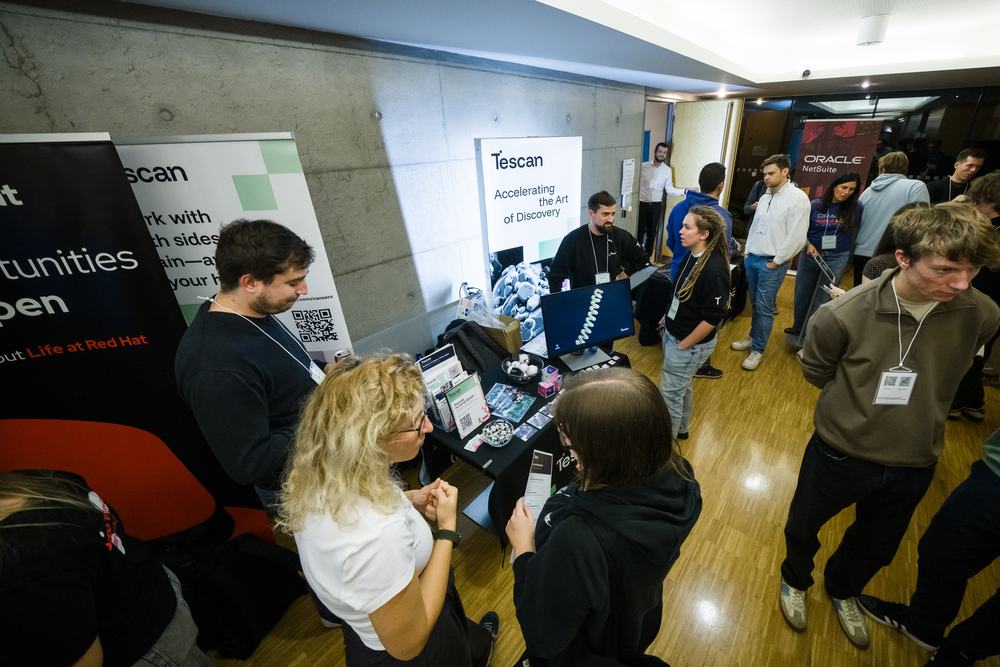
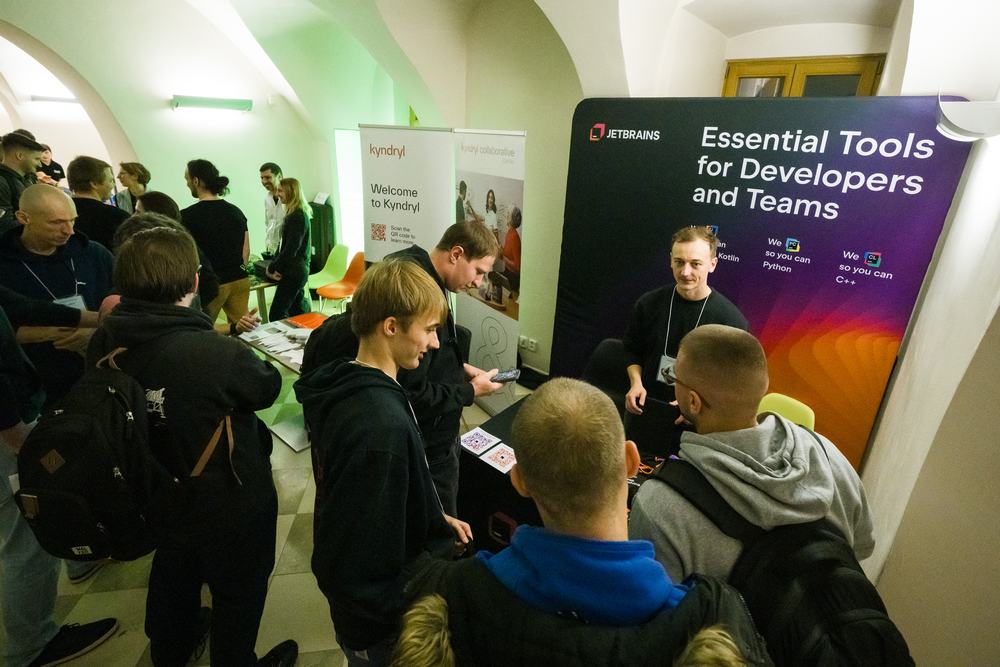
We were one of about 25 partner companies, alongside Oracle, Red Hat, SAP, JetBrains, NXP and Škoda Auto. The booths are where the partner companies show students what they can offer, such as cooperation and internship possibilities.
Two worlds, one code
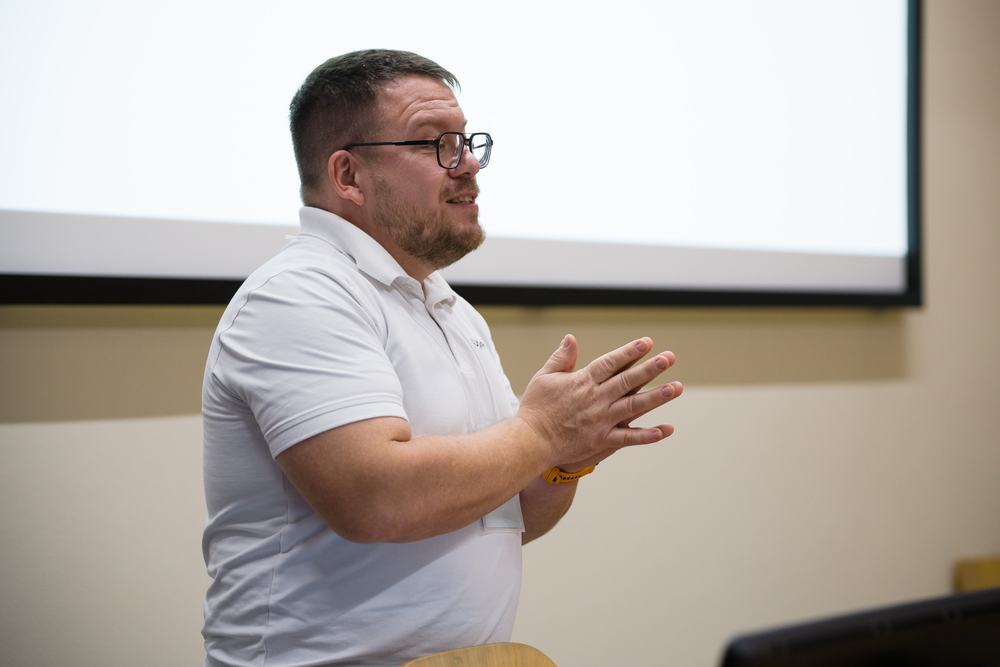
At a quarter past four, straight after the opening panel, Tomáš took room E104 in the Security & Embedded Systems track with “OpenSSL between the community and customers”, a talk about how OpenSSL works between its open-source community and the organisations that pay for support.
One slide set the two sides next to each other. Its title, in Czech, was Dva světy, jeden kód, two worlds and one code.
| Community | Commercial users | |
|---|---|---|
| Who | Individuals, distributions, academics, open-source projects | Banks, telcos, hardware and software makers, public administration |
| What they need | New features, quick fixes, an open process | Stability, certification, support for old versions and platforms |
| How they contribute | Pull requests, review, bug reports, discussion | Funding, feature requests, platform ports |
| What they get | Public releases, LTS, security fixes | Support, extended support for LTS versions, a FIPS certificate in their own name |
From the slide, translated from Czech.
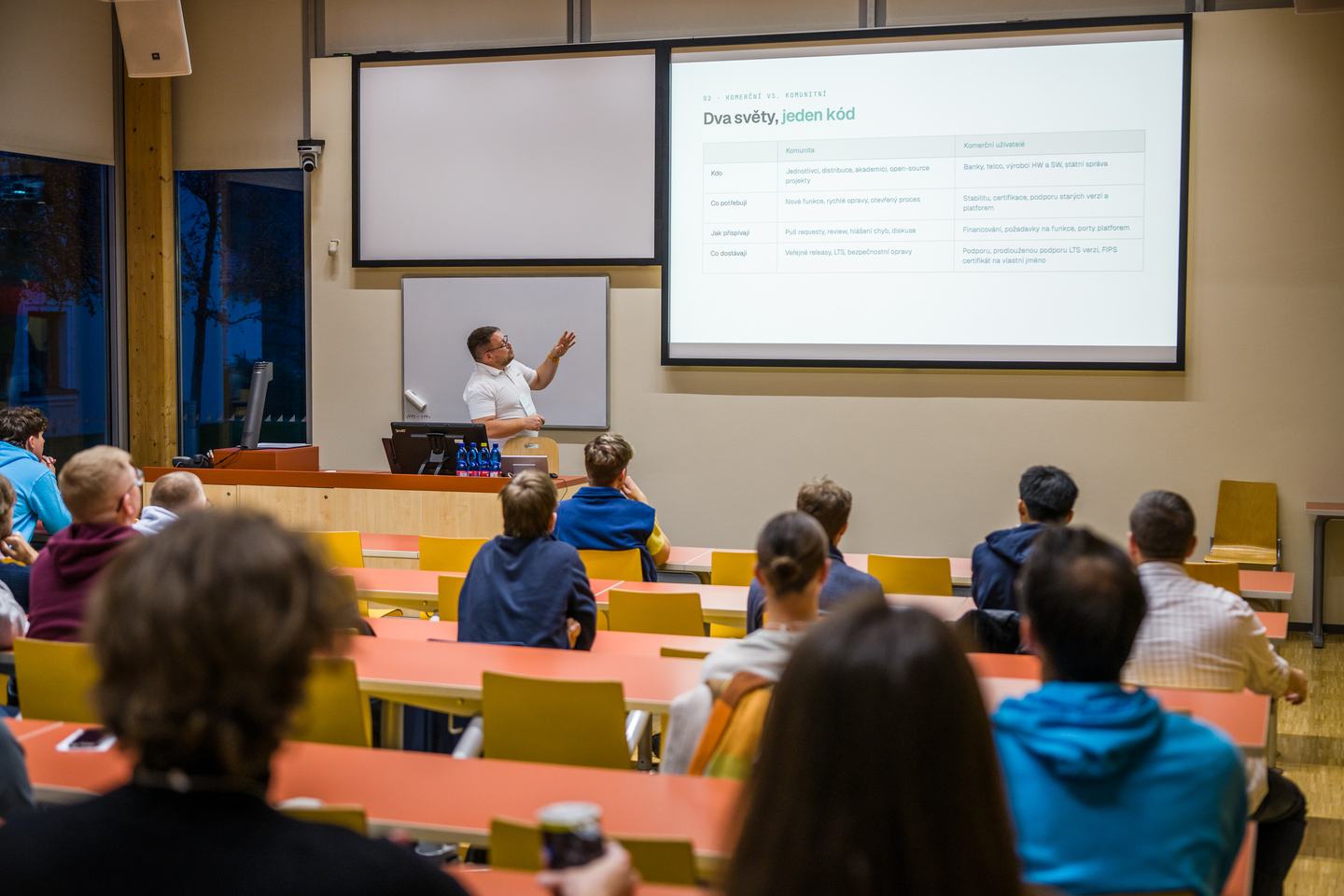
Another slide answered the question a student would ask next, which is how to get involved. The repository is public, so issues, pull requests, review and documentation are open to anyone, and through the cooperation with FI MU and FIT VUT there are student projects and research with the OpenSSL team in Brno.
A seat at the table
Before the conference began, Tomáš Vávra represented OpenSSL Corporation at the FIT Industrial Council, where the faculty and its partner companies compare notes on what today’s IT needs. The agenda covers key technologies, theses assigned by companies, internships, guest lectures, and research cooperation through contracts or grants.
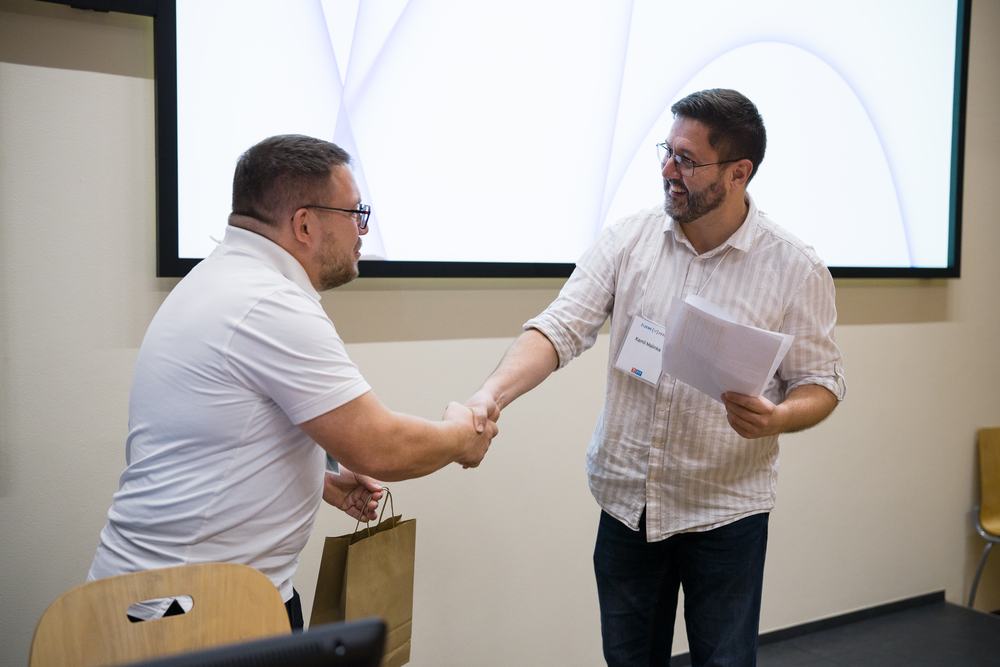
We have a seat there through our Bronze partnership with the faculty, which runs through Associate Professor Kamil Malinka’s Security@FIT group. He liked the talk. He wants to expand the cooperation and suggested meeting after the New Year to plan it.
Crack the vault
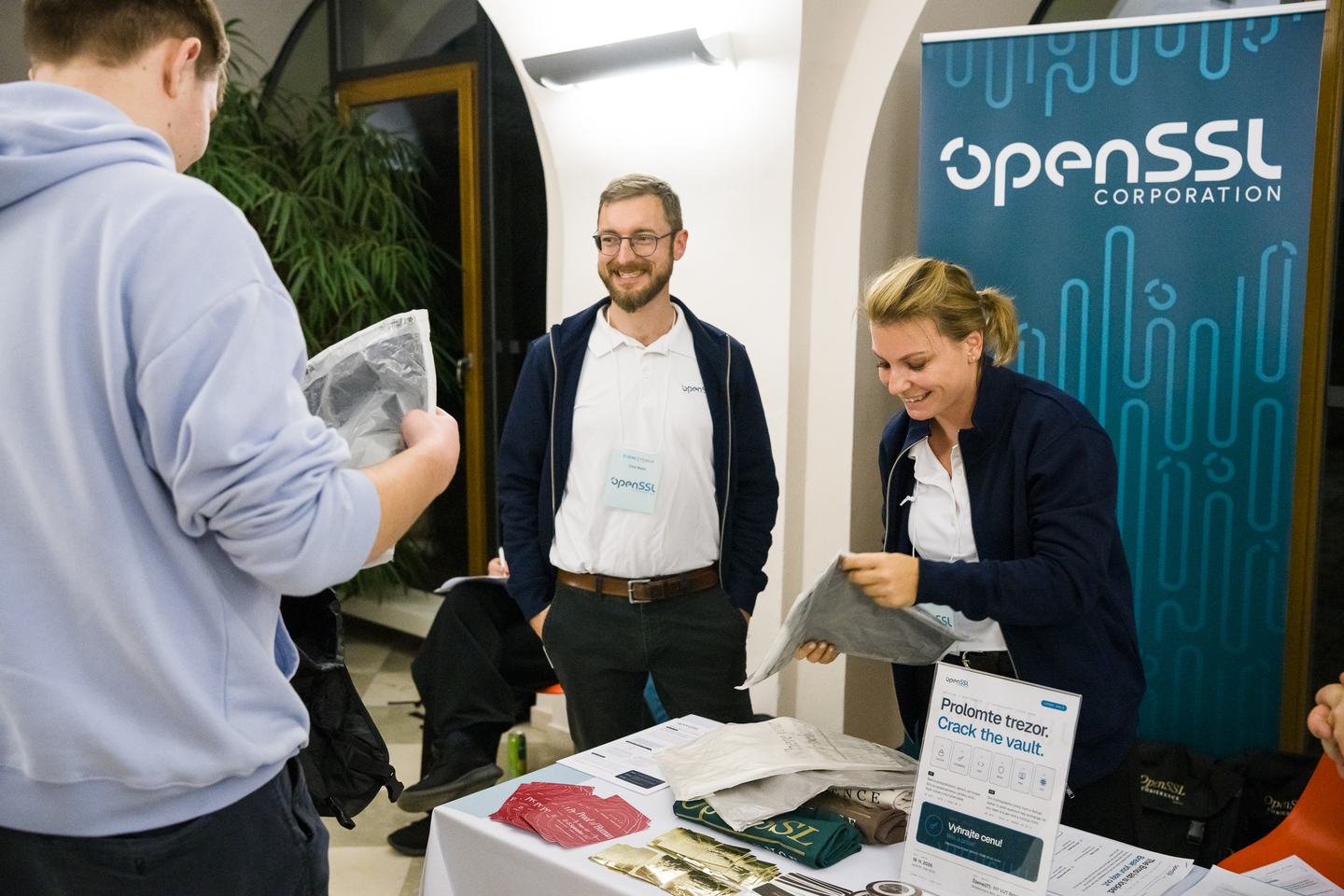
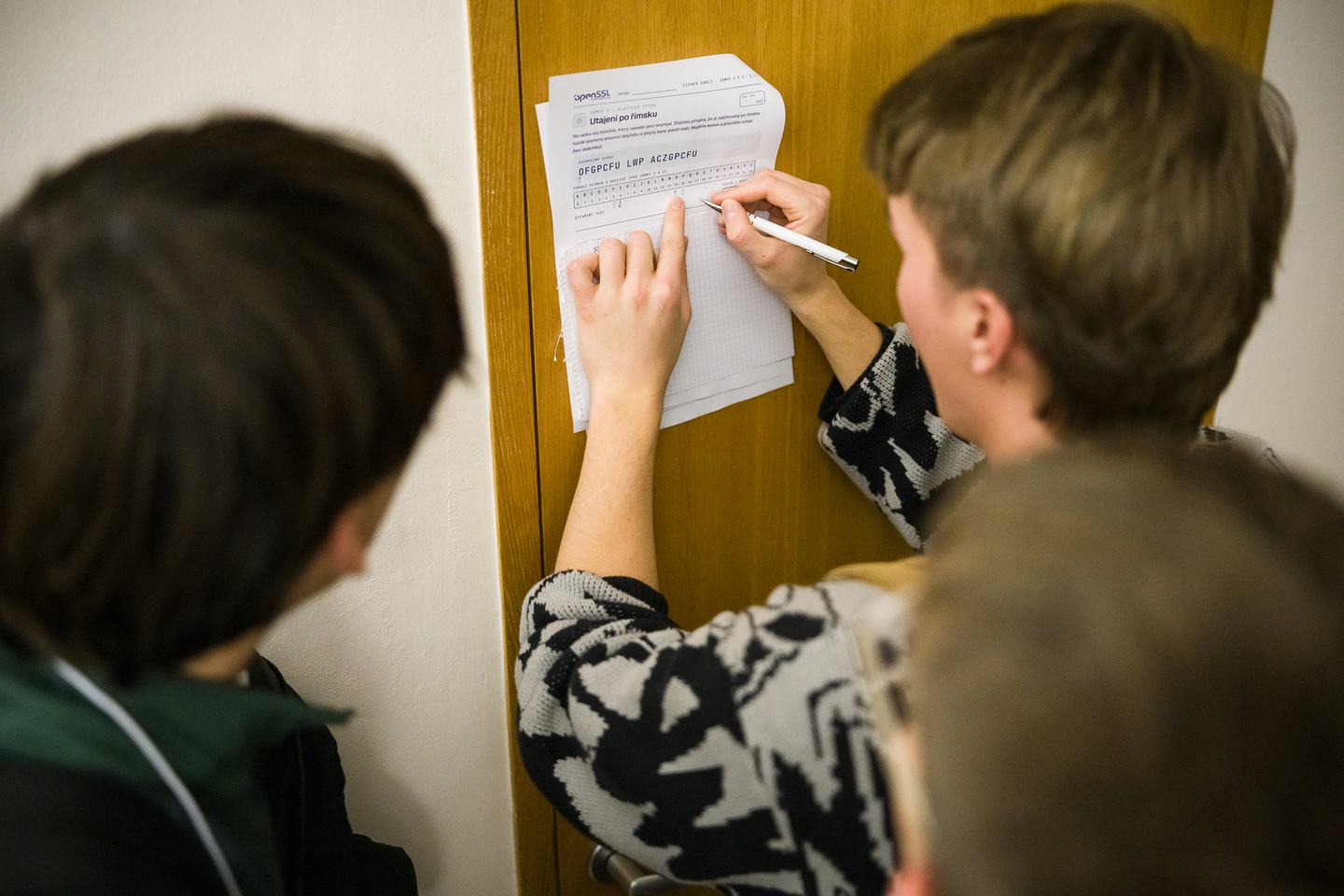
The booth had a table sign in two languages, Prolomte trezor above and Crack the vault below, and a stack of four-page sheets.
Page one of the sheet sets the scene.
The Brno lab is locked. Break your way out.
Cipher Vault · briefing · page 1 of 4
Cipher Vault is a paper escape room the team prepared for the students. It has six cryptographic locks, each stronger than the last, and you crack them in order, from a Roman cipher to post-quantum key exchange. You play solo or in a team of up to four, and the sheet allows 45 minutes. Pen and paper are enough, though OpenSSL on a laptop is allowed.
Roman-grade secrecy
A sticky note on the server rack, encrypted Roman style. Every letter has moved forward by the same secret amount. Find the shift.
The repeating key
A backup vault label under a Vigenère cipher. The admin chose a four-letter key, the name of the city the lab sits in.
One byte to rule the blob
A firmware blob XORed with one secret byte, repeated. The plaintext names a famous 2014 OpenSSL bug, so its first letter is H.
Birthday party
A certificate cache keeps only the first 32 bits of each SHA-256 fingerprint. How many certificates before two collide, at about 50% probability?
Textbook RSA
An old door controller with a tiny RSA key, n = 391 and e = 3. Factor the modulus, compute the private exponent, and the door is yours.
Harvest now, decrypt later
An adversary records your TLS traffic today, to decrypt once a large quantum computer exists. Which single change protects the sessions being recorded now?
Every lock gives up one part of the vault code, and an open vault can win a prize.
The sheet’s first rule is to work in order, because each lock teaches the idea you need for the next one. In four pages a student walks from Caesar to Vigenère, through XOR and the birthday bound, past a toy RSA key, and arrives at traffic that is being recorded today for a quantum computer that does not exist yet.
We are not printing the answers. You can have the first lock, though. This is the note on the server rack.
Try lock 1 · intercepted note
That reads like English. Lock 1 is open, and the first box of the vault code is yours.
The challenge was a big hit. Some students were so absorbed in it that they spent more than an hour at the table, on a sheet that allows 45 minutes.
People found us
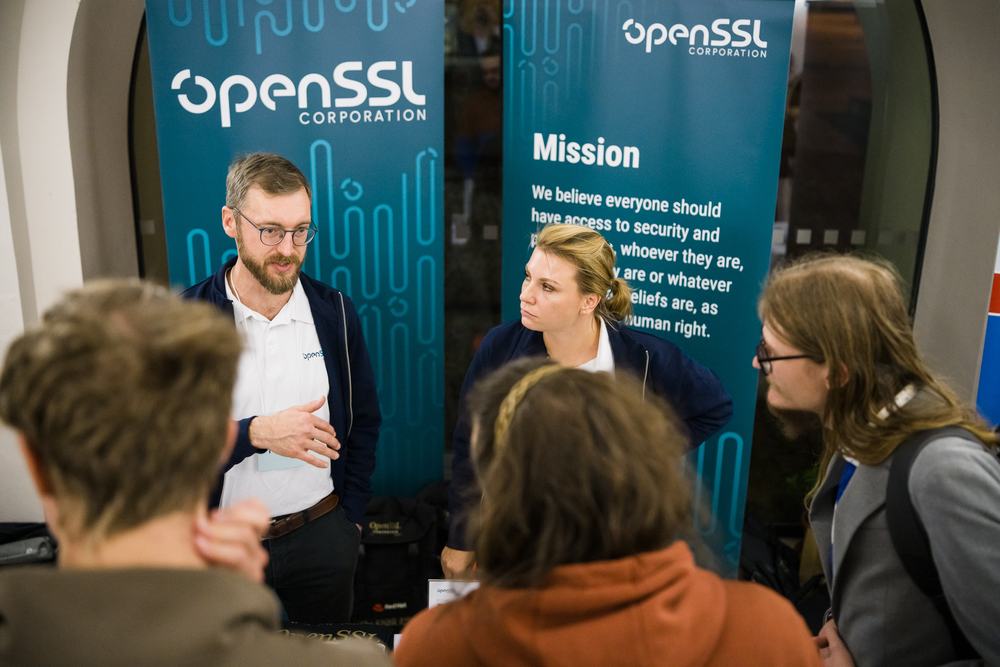
Our booth stood in one of the old monastery’s vaulted corridors, and someone was at it the whole time.
Some of the visitors were familiar. The team met several people they knew from our two OpenSSL Conferences, and one of them arrived with a complaint. Since our conference, he said, no other event has managed to meet his expectations.
We have noted the complaint and intend to make the problem worse.
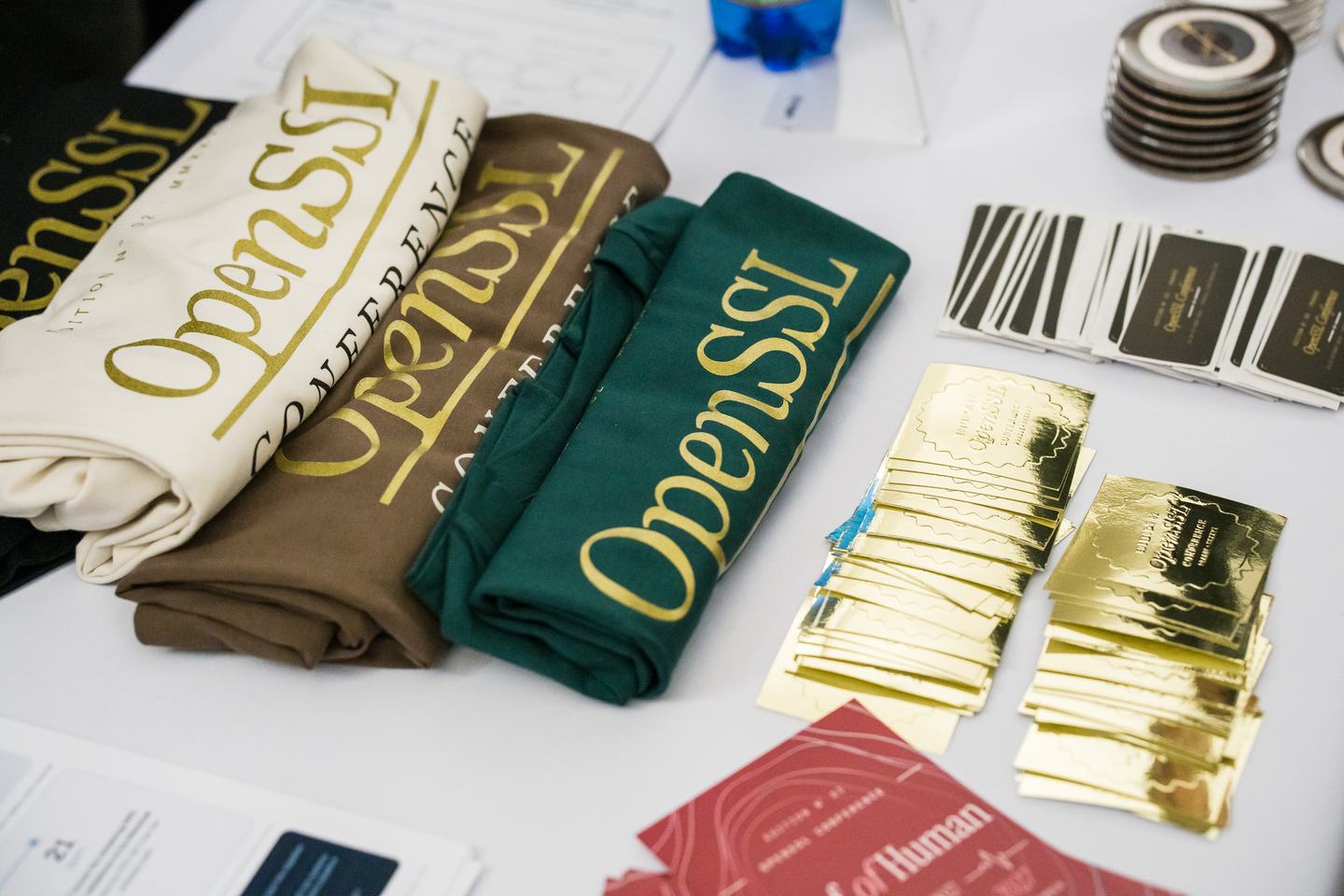
On the table, next to the sheets and a mug of pens, were OpenSSL Conference badges and T-shirts from Prague in October.
What stays with you
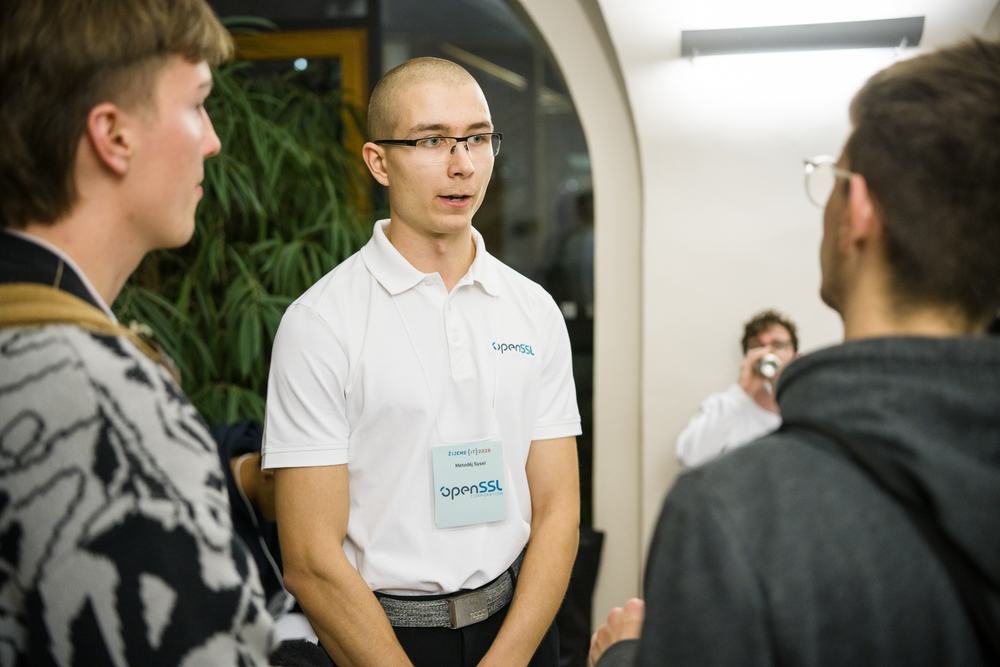
The on-site team was Tomáš Vávra, Chris Ward, Metoděj Sysel and Lenka Luklová, all in white OpenSSL polo shirts. Everyone got involved, and the four worked so well together that the same team was proposed for the next one, SPP Day, the Faculty of Informatics’ day with industrial partners at Masaryk University on 26 November. Metoděj set to work on a one-page version of the vault for it.
What stays with me is the hour. A student gave a company stand more than sixty minutes of a Thursday evening because someone handed them a good problem.
Thank you to the organisers at FIT VUT. The evening was well prepared and clearly signposted, and we are grateful for the chance to be part of it, to meet the students and the IT community, and to present OpenSSL Corporation at the faculty.
The lab is still locked, by the way. Lock 2 takes a four-letter key, and it is the name of the city.
Sources
Event details from the Žijeme{IT} 2026 programme. Challenge text from the Cipher Vault student pack. Slide content translated from Tomáš Vávra’s Czech slides.